How to Make Big Scary Decisions
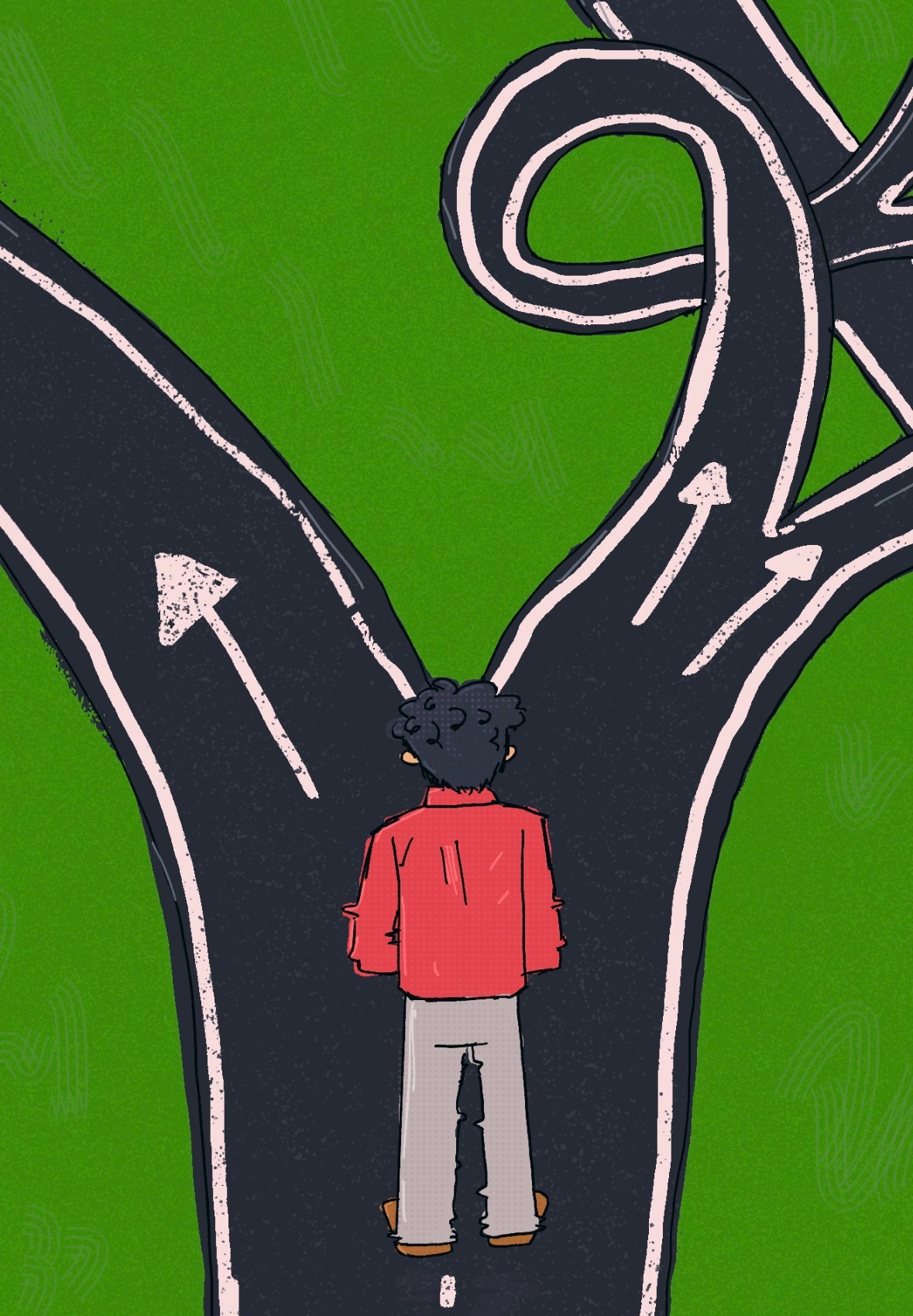
Most people don’t really make big decisions. They just delay them.
They tell themselves they are “thinking about it,” “weighing the options,” or whatever. It’s just procrastination parading as being “thoughtful.” Avoiding a decision can feel responsible because you have not yet made a mistake.
Let’s consider Dave.
Dave is 31. He has a respectable job at a respectable company making respectable money.
He hates it.
For the last year, he has had an unhinged desire to quit his job and open a kebab shop in Thailand.
His parents think this is idiotic. His girlfriend thinks it is a “phase.” His friend Tom, who has never been to Thailand and works in insurance, has very strong opinions about Thai commercial property.
Dave has made a spreadsheet. The spreadsheet has 14 tabs. Dave is not getting any closer to a decision. This is the problem with big decisions. We assume that if we think long enough, eventually the correct answer will reveal itself. Usually, it doesn’t.
At some point, Dave has to decide whether to open the fucking kebab shop.
Step 1: Dave has to pick a direction
For the really big decisions, the key is not certainty. It is direction.
A direction is not a strict ten-year plan. Those tend to collapse on contact with real life. It is a clear sense of what you want more of.
Dave doesn’t actually care about kebabs. He wants autonomy. He wants to build something of his own and have his income depend on that. Kebabs are just a means to an end.
Direction alone is not enough. You can face the right way and still stand still.
The decision should also make you grow. For Dave, growth means learning how to sell, hire, manage cash, handle customers, and operate a business. You need both, and often you need consistency over a long period for things to work out.
Let’s call this Marc’s Decision Formula:
Good Decision = Right Direction x Growth in that Direction
Direction without growth is wishful thinking.
Growth without direction is becoming excellent at a life you do not want.
Step 2: Dave has to define success for himself
Most advice is autobiographical.
People tell you what they would do, filtered through what they value, what they fear, and what stage of life they are in.
Dave’s dad optimized for stability. His friend Tom optimizes for salary. His boss optimizes for career status. None of them are necessarily wrong. They’re just answering their version of Dave’s question.
The goal is not to make choices about your life that sound impressive at a dinner party. The goal is to make choices that move you towards a life you actually want.
Step 3: Dave has to think about what he’d hate
Sometimes you will not have a clear vision of what you want next. That is fine. Clarity often starts in reverse.
Dave really isn’t sure if kebabs are for him. He just knows he doesn’t want his work to be dictated by someone else.
He doesn’t really know if he wants to live in Thailand either. He just knows he can’t handle seasonal winter depression anymore.
He doesn’t really need to know exactly who he wants to become, but he should know the version of himself he refuses to turn into.
Step 4: Dave has to choose who gets a vote
Ultimately, Dave’s decision impacts people around him—not just himself—even though this is his own life. So he should pick a few trusted people he can confide in and seek advice from people who have actually done the thing he wants to do.
Dave’s girlfriend will share the consequences of a move. Her opinion matters. Dave’s cousin Martha has actually moved to Thailand and opened a food business before and understands the process. Dave should listen to Martha.
Dave’s friend Tom, who works in insurance, is just speculating. Tom gets no vote.
You should not make a habit of explaining everything to everyone.
Some plans are too personal, too multi-step, or too early to survive being publicly dissected. Sometimes explaining a decision too soon weakens your confidence, not because the decision is wrong, but because other people will project their own uncertainty onto it.
Your family and friends will naturally care about you. They will question your decisions to ensure you have thought things out, but you have to differentiate between useful input and noise.
If someone consistently challenges your choices in a way that feels less like care and more like control, you are allowed to politely tell them to fuck off.
Step 5: Dave needs to pick a path and move on
I’ve left out one important part of Marc’s Decision-Making Formula: downside risk. But you try making an easy-to-remember formula with 20 variables.
Dave shouldn’t confuse courage with recklessness. Dave does not need to quit tomorrow, book a one-way flight, and sign a ten-year lease before he has sold a single kebab.
All he needs to do is ensure that his decision is not going to wipe him out and that he can recover.
Most decisions are not going to wipe you out completely.
Maybe Dave opens the kebab shop and becomes the undisputed king of late-night meat in Southeast Asia. Maybe it fails after eight months. Maybe he discovers that he hates kebabs. That isn’t really the point.
The mistake is believing Dave needs to know the ending before he can choose the next chapter. He doesn’t. None of us do.
When you’re making a big decision, stop asking: “How can I guarantee this works?” You can’t.
Ask:
- Is this taking me in the direction I actually want to go?
- Will I grow by going there?
- And if I’m wrong, will I be in a better position to make the next decision?
If the answer is yes, that may be enough.
Not perfect. Not certain.
Enough to open the fucking kebab shop.